
Seed cycling: the simplest thing you can do for your hormones
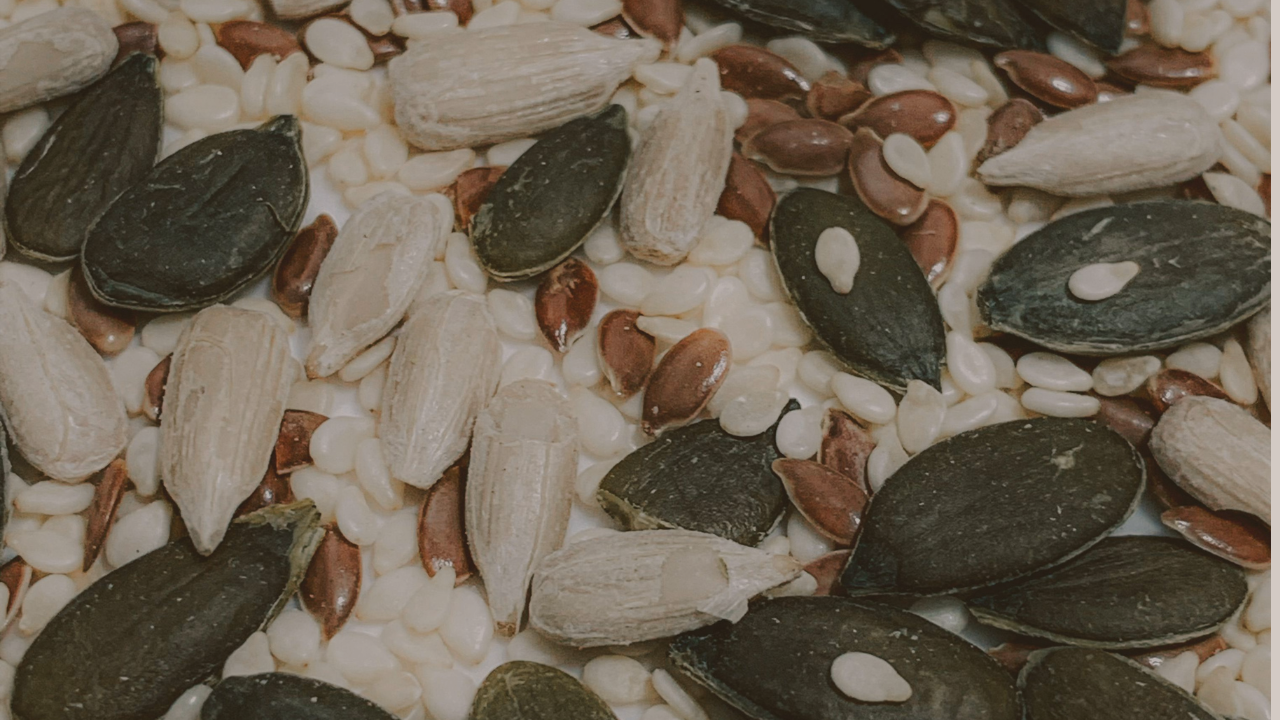
As a naturopath, I work with two very different types of people. The first trusts their instincts, wants everything natural, and is comfortable with anecdotal evidence. The second is a sceptic: they want data, peer-reviewed research, and a mechanism of action before they will commit to anything. I love working with both. And honestly? The sceptics make us all better. Cynicism drives research, research changes health policy, and when private funding finally reaches natural medicine, what we find is almost always far more better results than we knew and expected.
Which brings me to seed cycling. For years it sat in the "old school natural remedy" category. Something practitioners recommended, women swore by, and researchers largely ignored. That has changed. We have more evidence now, and what it reveals is better than we imagined. Seed cycling is a genuine clinical tool with a real mechanism of action, and it costs about £1 a day.
What is seed cycling, and why does it work?
Seed cycling is the practice of eating specific seeds in the first half of your cycle and different seeds in the second half, to provide targeted nutritional support for oestrogen and progesterone respectively. It works through three mechanisms: phytoestrogen modulation via lignans, mineral co-factor provision for hormone synthesis, and liver support for oestrogen clearance.
It is not a cure. It is consistent, gentle nutrition that allows your body's own hormonal mastery to function more efficiently. Women who respond best are those dealing with PMS, irregular cycles, mild oestrogen dominance, or post-pill hormone rebalancing...which is to say, the majority of reproductive-age women I see.
First, understand your cycle as four seasons
Before the seeds make sense, the cycle map needs to. Your menstrual cycle has four phases, each with its own metabolic signature and its own nutritional needs.
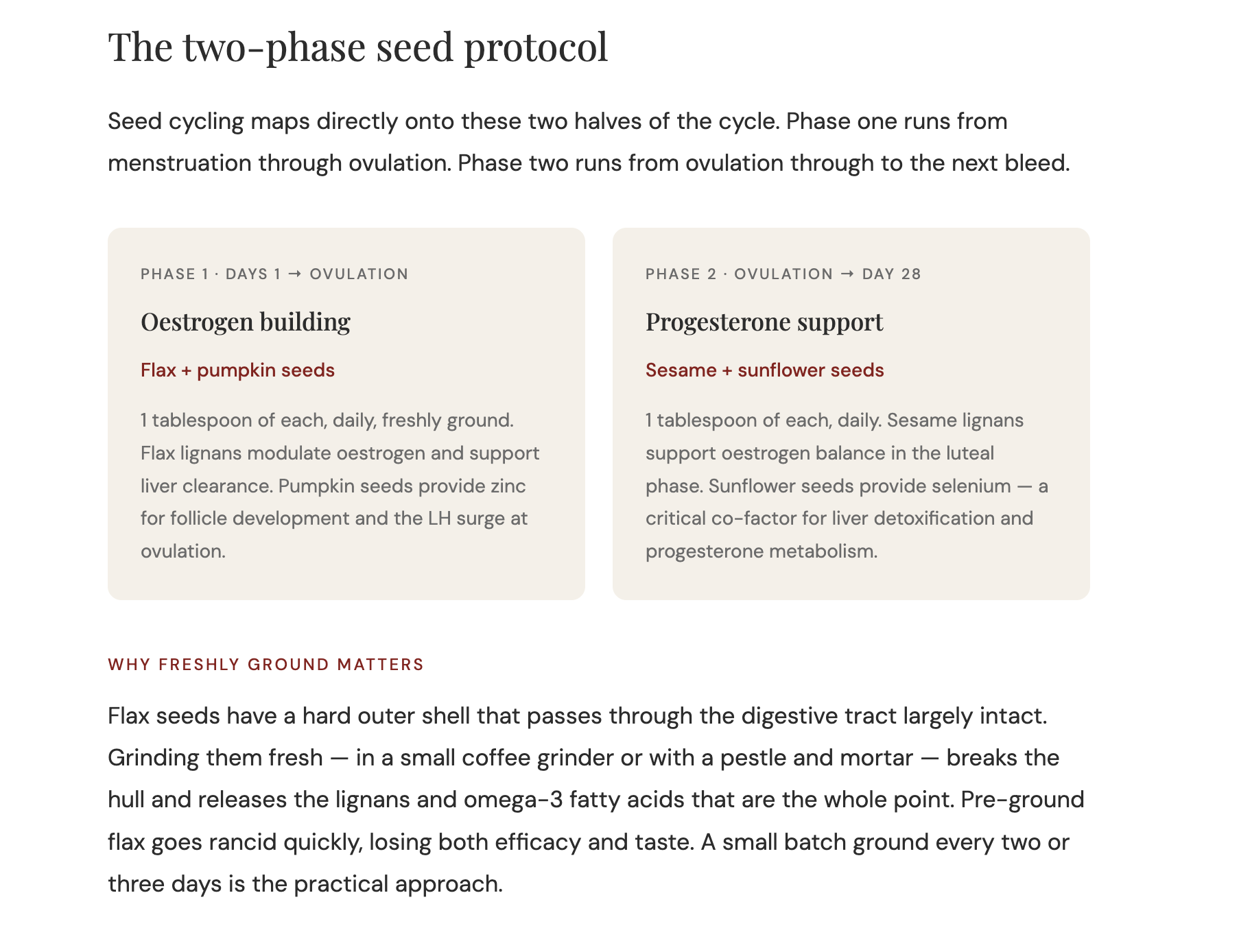
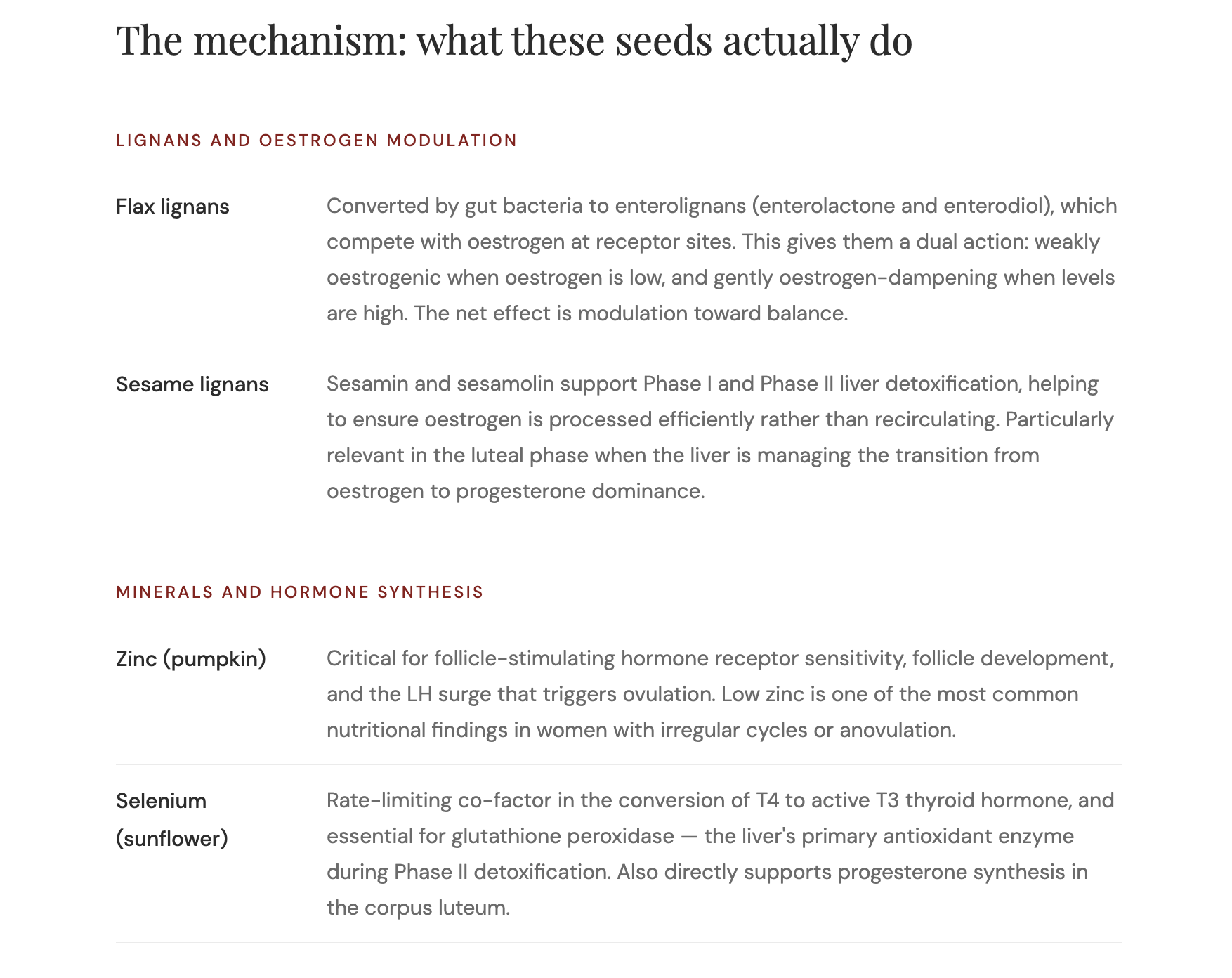
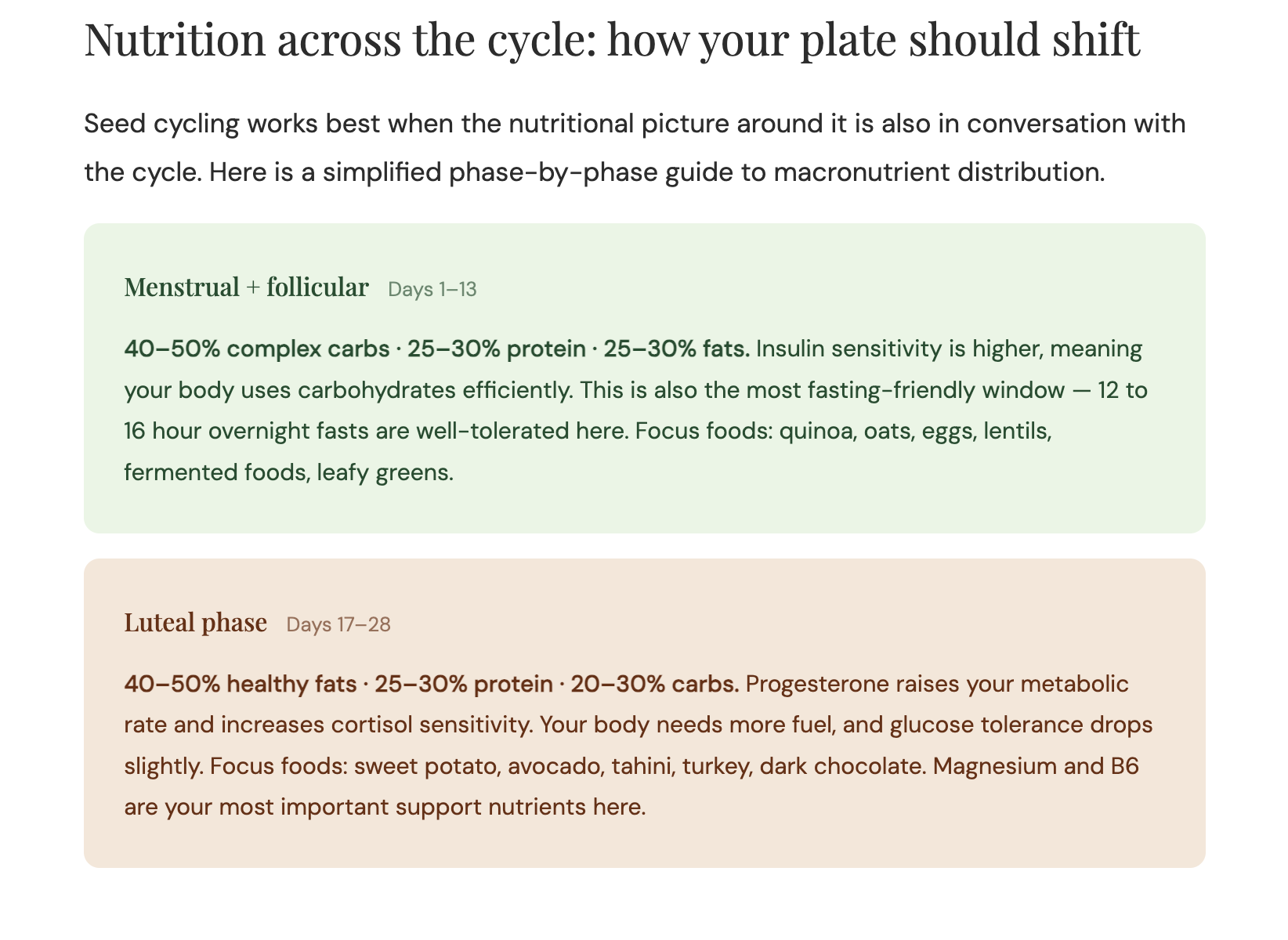
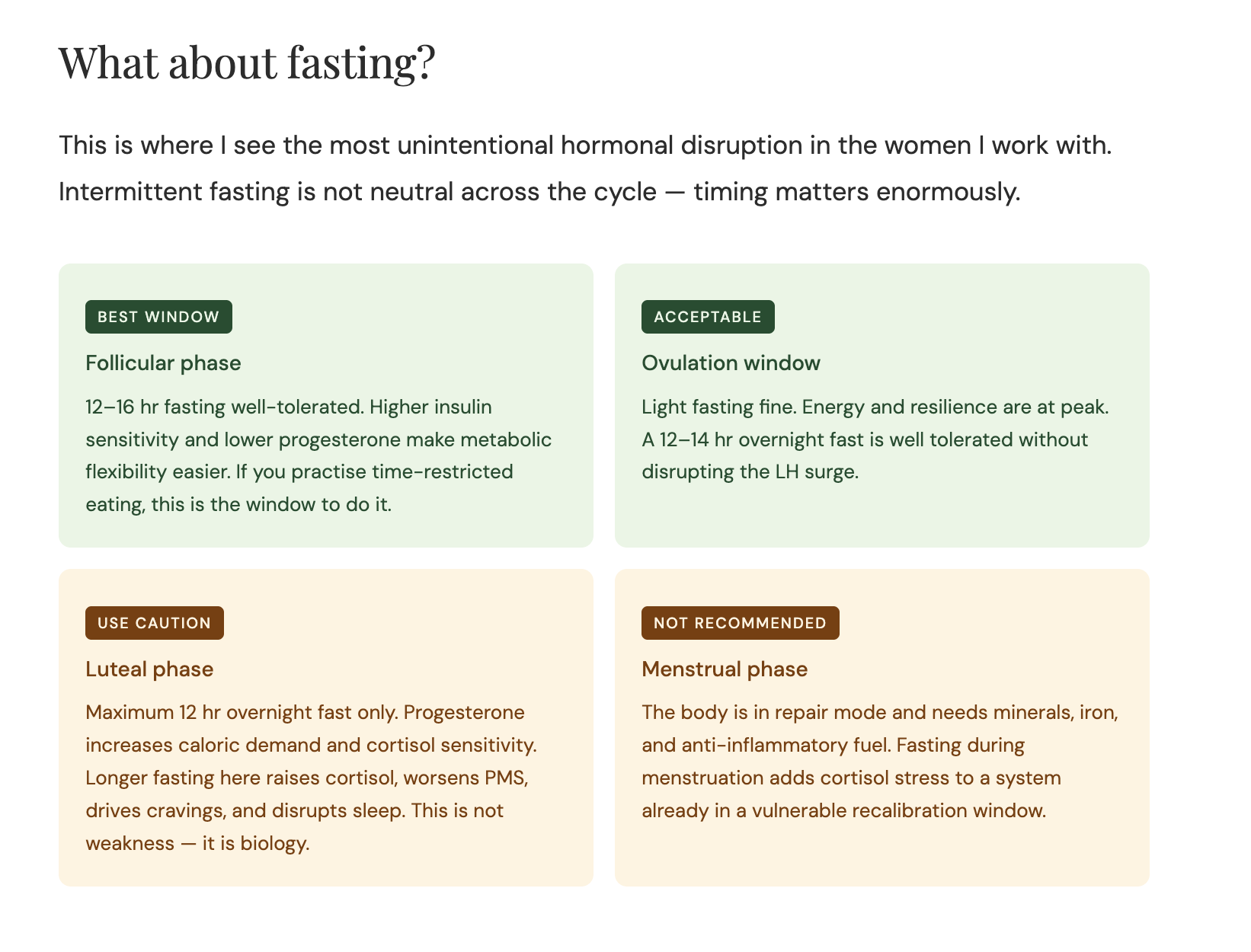 A small nuance worth knowing
Not every woman runs a 28-day cycle. Cycles that are shorter, longer, or irregular do not disqualify seed cycling — they just require a different tracking anchor. For women with irregular cycles or in menopause, the most practical approach is to align seed cycling to the moon phases instead: new moon to full moon for flax and pumpkin, full moon to new moon for sesame and sunflower. This rhythm holds even when the cycle does not.
How to actually do this
Follicular phase recipe
- 1 tbsp flax seeds, freshly ground
- 1 tbsp pumpkin seeds, ground or whole
- 1 large handful of berries (fresh or frozen)
- 200ml almond or oat milk
- 1 scoop quality protein powder
- ½ tsp cinnamon (blood sugar support)
Luteal phase recipe
- 1 apple, sliced
- 2 tbsp tahini (sesame seed butter — counts as your sesame)
- 1 tbsp sunflower seeds, scattered over
- Optional: a square of dark chocolate (70%+) for magnesium
Seed cycling will not fix everything. But it is a daily act of working with your biology rather than pushing against it. And sometimes, that is exactly where the shift begins... in the subtle, small daily habits!
Please share and let me know how you find it!
To your health and happiness,
— Natalie Smyth, ND · Registered Naturopath & Functional Medicine Practitioner · HER Daily Rhythm
